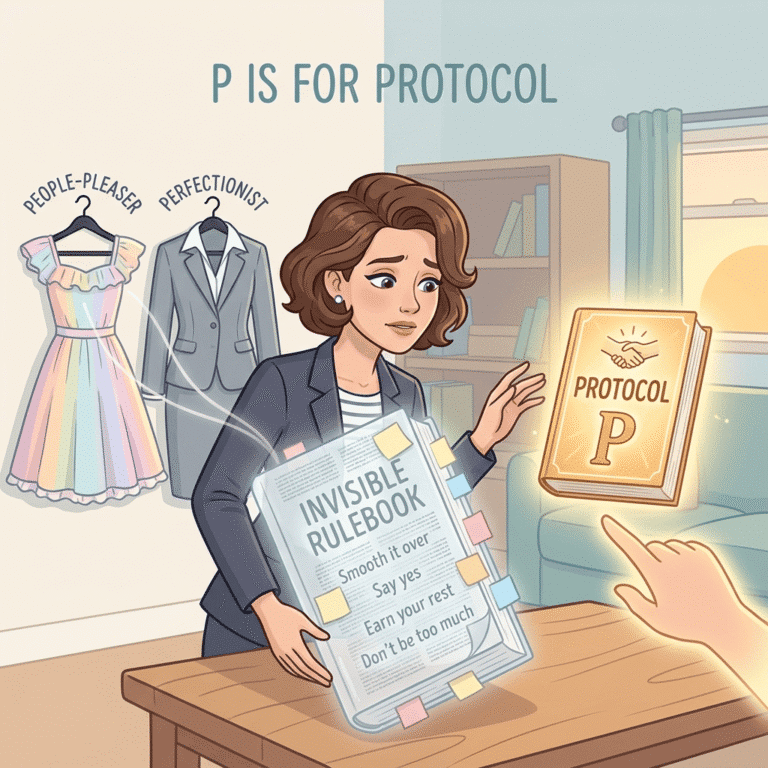
You’ve been following a rulebook nobody ever handed you.
No orientation. No training. No “welcome to the team, here’s your copy.” And yet, somehow, you know it cold- every rule, every clause, every unspoken penalty for breaking one.
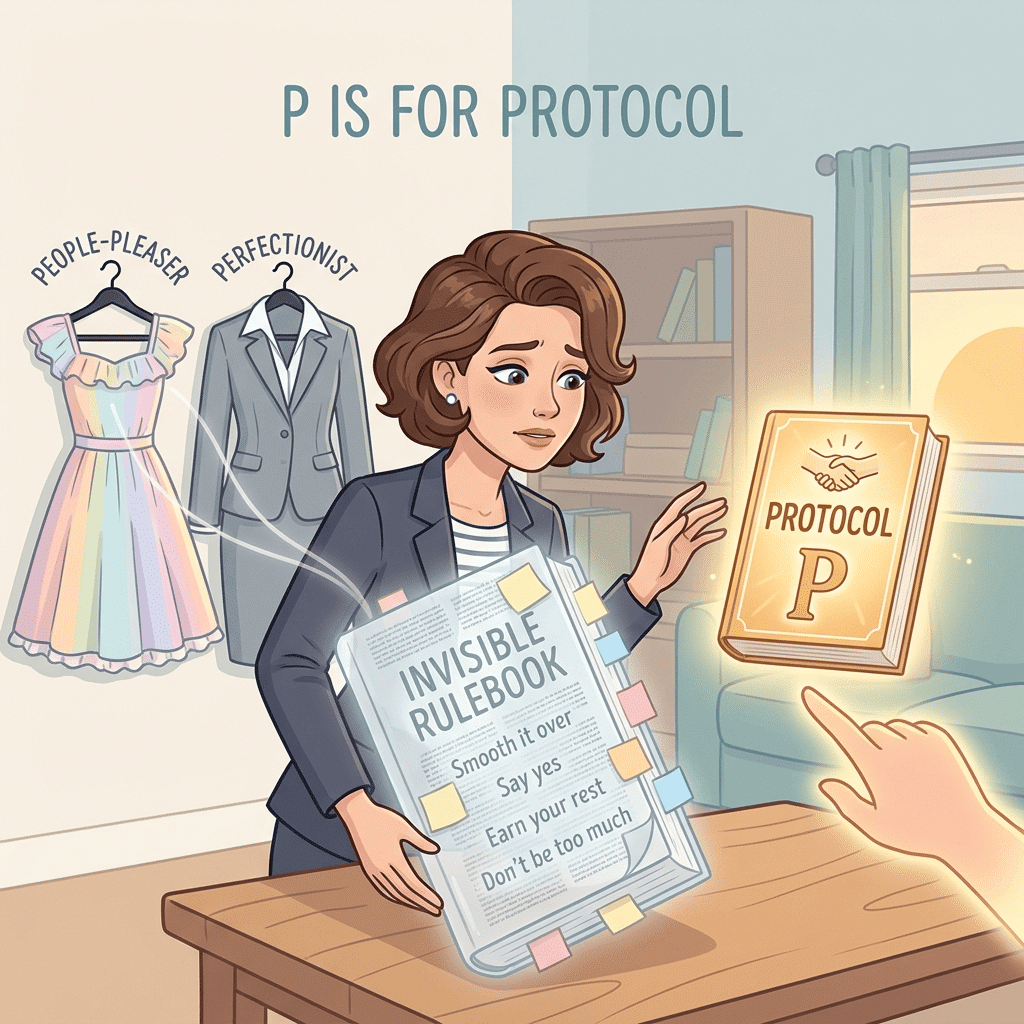
I’m calling it a protocol, because that’s exactly what it is- a set of rules you follow so automatically you don’t even register them as rules anymore. You just call it “being a good person” or “handling things” or “not being difficult.” (Spoiler: it’s a protocol. And you didn’t write it.)
Here’s a sample of the fine print, in case you need a reminder of what you agreed to:
- Smooth it over before anyone gets uncomfortable- especially you.
- Say yes before you’ve even let yourself consider no.
- Earn your rest. You don’t get to just… take it.
- Never be the reason something feels hard for someone else.
- If you’re not sure whether you did enough, assume you didn’t.

Sound familiar? (If you nodded at even one of those, keep reading. If you nodded at all five, we REALLY need to talk.)
Two weeks ago I wrote about people-pleasing. Last week, perfectionism. And if you’ve been reading along, you already know those two are basically cousins who show up to the same family reunion wearing the same outfit. People-pleasing keeps everyone else comfortable. Perfectionism makes sure you never give anyone a reason to be disappointed in you. Different costumes, same protocol underneath: don’t be too much, don’t need too much, don’t take up space you haven’t earned.
And here’s the exhausting part nobody tells you- following an invisible rulebook is its own full time job. There’s no clocking out. You’re enforcing a set of rules 24/7 that nobody else even knows exist, and you’re doing it so well that everyone around you thinks you’re just… naturally easy going. Naturally low maintenance. Naturally fine.
You are not fine. You’re just really, really good at compliance.
[PERSONAL ANCHOR GOES HERE- once we have your moment, this becomes the hinge of the whole post. This is where the invisible protocol stops being a concept and becomes a specific memory- the moment you caught yourself following a rule you never agreed to.]
Here’s the thing about a protocol you didn’t write- you can’t edit it by just deciding to. You’ve probably already tried the “I’ll just stop people-pleasing now” approach. (Spoiler: it doesn’t work like that. If it did, none of us would need this conversation.) You can’t out-willpower a program that got installed before you were old enough to consent to it.
Which is where the other kind of Protocol comes in.
In Splankna, “the Protocol” isn’t a metaphor- it’s the actual name for the structured, listening-prayer-led process we use to find out where your rulebook actually came from, and rewrite it. We open in prayer and invite God to mark out where He wants to work, and then we listen. Sometimes what surfaces is exactly what you expected. Other times, it’s something adjacent- a moment from years earlier that quietly taught you the same lesson in a different room. Either way, we’re not managing the symptom. We’re going after the rule itself.
That’s the difference between the protocol you’ve been running on autopilot and the Protocol that’s actually built to free you from it. One was handed to you without your permission. The other, you get to walk into on purpose.
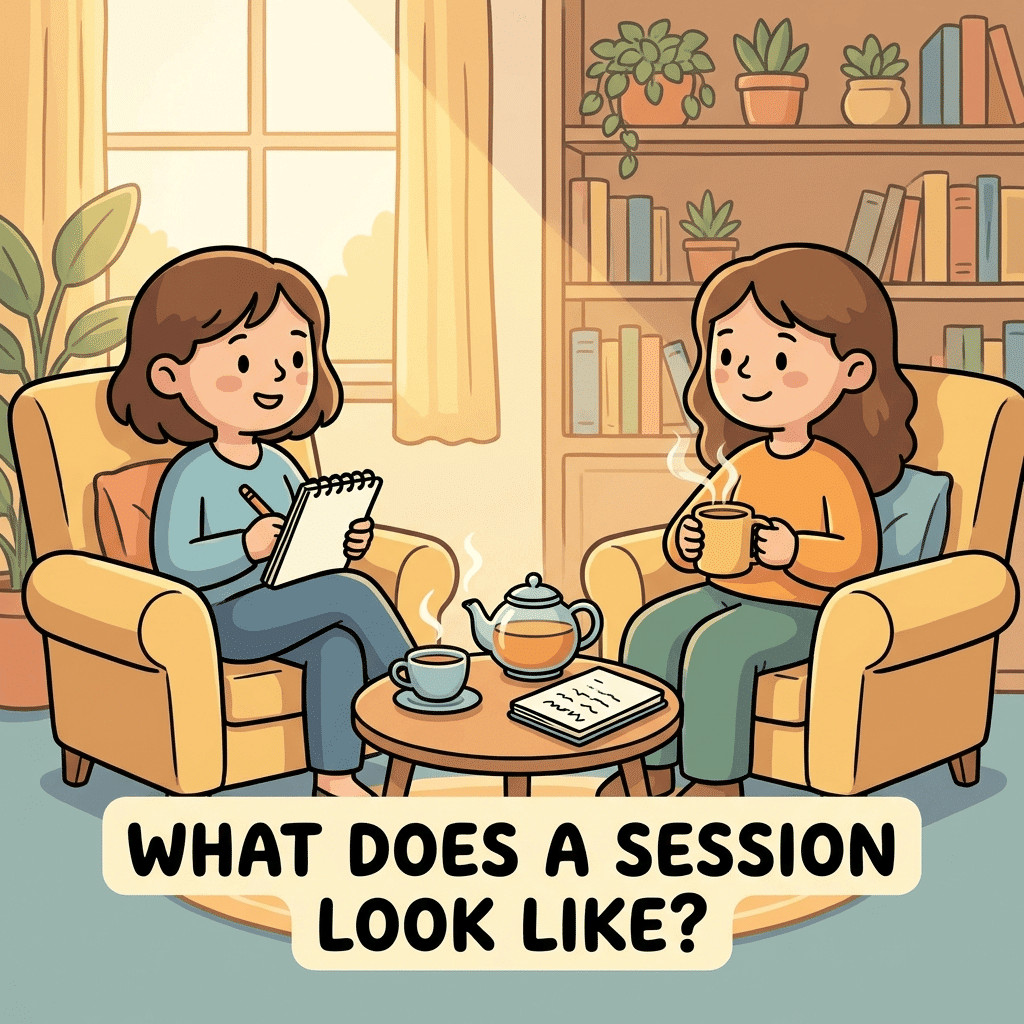
If any part of that invisible rulebook sounded like your own handwriting, I’d love to share with you about what a Splankna session actually looks like- right here. No pressure, no script. Just an honest look at whether the Protocol might be exactly what you need to finally rewrite the one you’ve been quietly enforcing your whole life.
Which rule on that list have you been enforcing the longest- and who taught it to you?